AMERICANS !
THEY'RE OVERPAID, OVERSEXED, AND OVER HERE!
OVERPAID, OVERSEXED, AND OVER HERE !
The phrase became a widespread "wisecrack" in Britain and Australia during the Second World War to describe
the American GIs. While often said with a bit of a wink, it reflected real social tensions caused by the
sudden "friendly invasion" of millions of high-spirited, well-funded American troops into tired,
rationed-stretching communities.
The Meaning Behind the Words
Overpaid: A U.S. private earned roughly three to four times more than his British counterpart (a "Tommy").
This allowed GIs to buy better meals, luxury items like nylons and chocolate, and treat local women to nights
out that British soldiers simply couldn't afford.
Oversexed: This referred to the GIs' perceived success with British women. Between their "exotic" Hollywood
accents, smart uniforms, and access to gifts like stockings and sweets, many British men felt the Americans
were a threat to their romantic prospects at home.
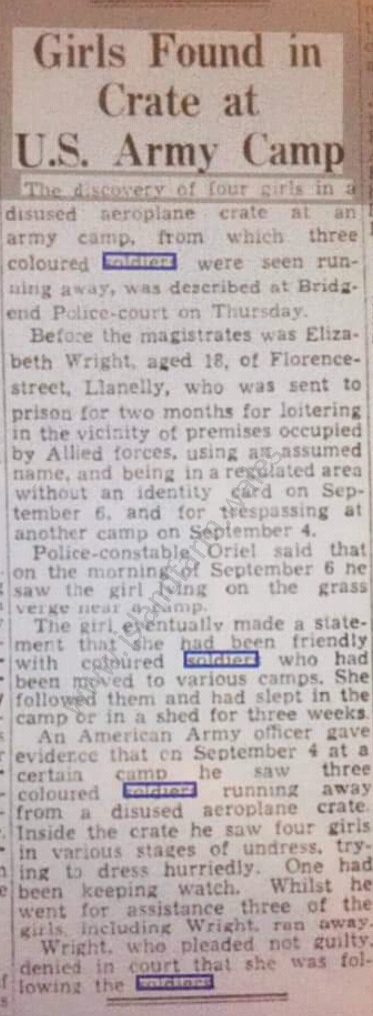
Over here: By 1944, the shear volume of Americans was staggering. In places like Bridgend and the surrounding
areas, the military buildup for D-Day meant that every village, cinema, and pub was crowded with American
personnel.
The American Comeback
The GIs, never known for being short of a witty reply, developed their own retort to describe the British:
"Underpaid, underfed, undersexed, and under Eisenhower."
This was a playful jab at the strict rationing in Britain, the lower military pay, and the fact that the
entire Allied effort was being led by the American General Dwight D. Eisenhower.
Cultural Legacy
The phrase was famously popularized by the English comedian Tomy Trinder, who used it in his stage acts and
radio broadcasts to great effect. Despite the grumbling, most historians agree the "Special Relationship" held
up well; roughly 60,000 British women eventually became "War Brides" and moved to the United States after the
war.